

Are there any excipients that can prevent the crystallization of drugs in solutions?
In the pharmaceutical industry, the stability of drug solutions is of paramount importance. One of the significant challenges is the crystallization of drugs in solutions. Crystallization can lead to altered drug bioavailability, reduced efficacy, and potential safety issues. This is where excipients come into play. As an excipient supplier, we understand the crucial role that excipients can play in preventing drug crystallization.
The Problem of Drug Crystallization in Solutions
Drug crystallization in solutions occurs when the drug molecules come together and form an ordered, solid structure. This can be influenced by various factors such as temperature changes, pH variations, supersaturation, and the presence of nucleation sites. When crystallization happens, it can cause precipitation, which may lead to clogged drug delivery systems, inconsistent dosing, and decreased therapeutic effectiveness.
For example, in parenteral formulations, the presence of crystals can cause blockages in needles and catheters, making it difficult to administer the drug. In oral liquid formulations, crystallization can result in an unpleasant taste and texture, leading to poor patient compliance. Therefore, finding ways to prevent drug crystallization is essential for the successful development and use of pharmaceutical products.
Excipients as Crystallization Inhibitors
Excipients are substances other than the active pharmaceutical ingredient (API) that are included in a drug formulation. They serve various functions, including improving the stability, solubility, and bioavailability of the API. Some excipients have the ability to prevent drug crystallization by interfering with the formation of crystal nuclei and the growth of crystals.
One class of excipients that is commonly used as crystallization inhibitors is polymers. Polymers can form a protective layer around the drug molecules, preventing them from aggregating and forming crystals. They can also increase the viscosity of the solution, which slows down the movement of drug molecules and reduces the likelihood of crystal formation.
Specific Excipients for Preventing Drug Crystallization
Povidone K17 Polymer
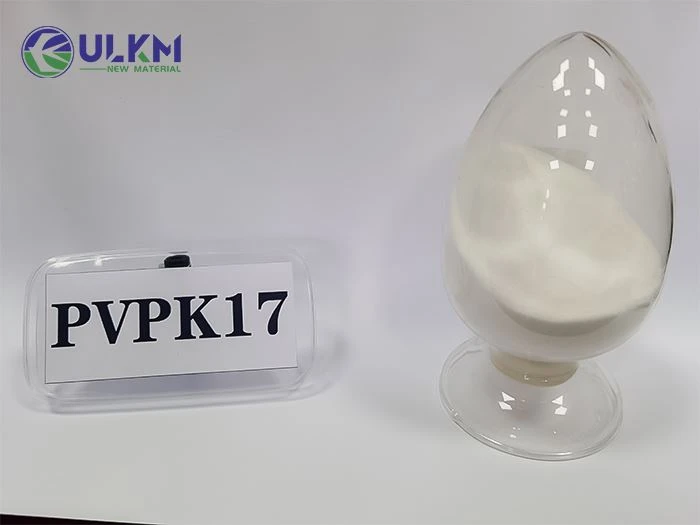
Povidone K17 Polymer is a water-soluble polymer that has been widely used in the pharmaceutical industry as a crystallization inhibitor. It has a low molecular weight, which allows it to form a tight network around the drug molecules, preventing them from coming together and forming crystals. Povidone K17 can also enhance the solubility of poorly soluble drugs, which further reduces the risk of crystallization.
In addition to its anti - crystallization properties, Povidone K17 is also biocompatible and has good adhesive properties. This makes it suitable for use in various drug delivery systems, including tablets, capsules, and liquid formulations.
Povidone K90 Excipient
Povidone K90 Excipient is another type of povidone polymer with a higher molecular weight compared to Povidone K17. The high molecular weight of Povidone K90 results in a more viscous solution, which can effectively inhibit crystal growth. It can form a thick, protective layer around the drug molecules, preventing them from interacting with each other and forming crystals.
Povidone K90 is often used in pharmaceutical formulations where a high degree of stability is required, such as in controlled - release systems. It can also improve the physical stability of the formulation by preventing phase separation and sedimentation.
Pvp - K25 Tablet Excipient
Pvp - K25 Tablet Excipient is a polyvinylpyrrolidone (PVP) polymer with a medium molecular weight. It has excellent solubility in water and organic solvents, making it suitable for a wide range of drug formulations. Pvp - K25 can act as a crystallization inhibitor by adsorbing onto the surface of the drug molecules, preventing them from aggregating and forming crystals.
In tablet formulations, Pvp - K25 can also act as a binder, which helps to hold the tablet together. This dual function makes it a valuable excipient in the pharmaceutical industry.
Mechanisms of Action of Excipients in Preventing Crystallization
The mechanisms by which excipients prevent drug crystallization can be classified into several categories:
- Nucleation Inhibition: Excipients can adsorb onto the surface of potential nucleation sites, preventing the formation of crystal nuclei. For example, polymers like povidone can form a layer around the drug molecules, blocking the sites where crystal growth could initiate.
- Crystal Growth Inhibition: Once a crystal nucleus has formed, excipients can interfere with the growth of the crystal. They can adsorb onto the crystal surface, preventing the addition of new drug molecules to the growing crystal. This slows down or stops the crystal growth process.
- Solubility Enhancement: Some excipients can increase the solubility of the drug in the solution. When the drug is more soluble, the concentration of the drug in the solution is below the saturation point, reducing the driving force for crystallization.
Factors to Consider When Choosing Excipients for Preventing Crystallization
When selecting excipients to prevent drug crystallization, several factors need to be considered:
- Compatibility with the API: The excipient must be compatible with the active pharmaceutical ingredient to avoid any chemical interactions that could affect the stability and efficacy of the drug.
- Physicochemical Properties: The physicochemical properties of the excipient, such as solubility, molecular weight, and viscosity, can affect its ability to prevent crystallization. For example, a polymer with a higher molecular weight may be more effective in inhibiting crystal growth due to its increased viscosity.
- Regulatory Approval: The excipient must be approved by the relevant regulatory authorities for use in pharmaceutical products. This ensures the safety and quality of the final drug formulation.
- Cost - effectiveness: The cost of the excipient is also an important consideration. A balance needs to be struck between the performance of the excipient and its cost to ensure the economic viability of the drug formulation.
Conclusion
As an excipient supplier, we offer a range of excipients, such as Povidone K17 Polymer, Povidone K90 Excipient, and Pvp - K25 Tablet Excipient, that can effectively prevent the crystallization of drugs in solutions. These excipients work through various mechanisms to inhibit nucleation and crystal growth, enhance drug solubility, and improve the stability of pharmaceutical formulations.
If you are involved in the development or production of pharmaceutical products and are facing issues with drug crystallization, we invite you to contact us for more information on our excipients. Our team of experts can provide you with personalized advice and solutions to meet your specific needs. We look forward to the opportunity to discuss your requirements and explore how our excipients can contribute to the success of your drug formulations.

References
[1] Strickley, R. G. (2004). Solubilizing excipients in oral and injectable formulations. Pharmaceutical Research, 21(2), 201 - 230.
[2] York, P. (1999). The use of polymers in the formulation of poorly water - soluble drugs to enhance dissolution rate and bioavailability. Advanced Drug Delivery Reviews, 36(2 - 3), 283 - 302.
[3] Serajuddin, A. T. M. (1999). Improving drug solubility for oral delivery using solid dispersions. Journal of Pharmaceutical Sciences, 88(10), 1058 - 1066.